


If you’ve been investing over the last 15 years, the market has taught you a pretty simple lesson:
Buy the dip.
And honestly, it’s been a pretty good strategy.
COVID sent the S&P 500 down more than 30%, and the market recovered incredibly fast. In 2022, stocks fell around 25% as inflation took off and the Fed aggressively raised rates. More recently, we had another near-20% decline in 2025.
Every time, the market eventually moved higher.
Add in all of the excitement around AI today, and it’s easy to feel like stocks can only keep going up.
That’s where I think recency bias can become dangerous. Right now, anytime stocks go down, a lot of investors buy the dip and expect it to bounce right back. The April tariff selloff is a perfect example.
Eventually, I think we’ll get a decline where buying the dip takes a lot longer to pay off.
Maybe Things Really Are Different
There are actually some good reasons recessions could be less frequent today.
Information moves almost instantly. Companies can react faster. The economy is more diversified and increasingly driven by technology and services. The Fed and federal government have also become much quicker to step in when things go wrong.
Maybe we really will have fewer recessions going forward. The chart below shows a pretty clear trend, but it’s impossible to know for sure.
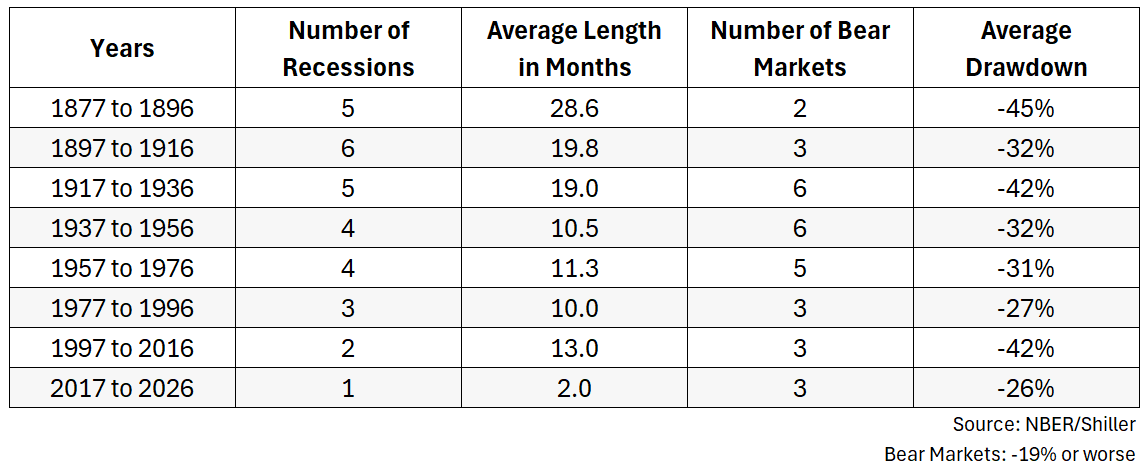
What I find interesting is that fewer recessions haven't meant fewer big market declines.
The economy may have gotten better at avoiding long recessions, but investors haven't gotten better at avoiding panic.
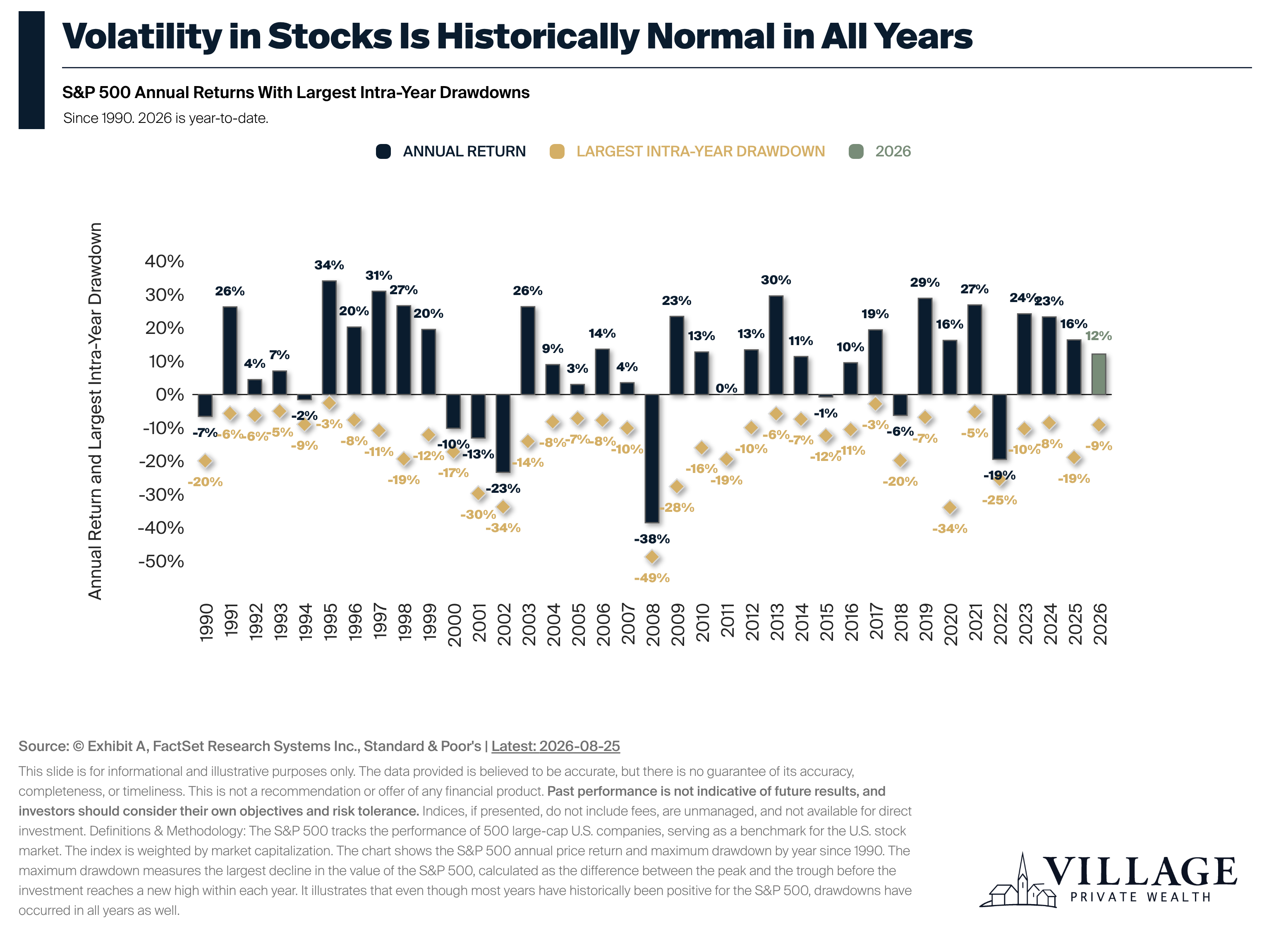
A bad stretch in the market doesn’t always mean a bad year. Even during some great years for stocks, investors had to sit through pretty uncomfortable declines along the way.
Recency Bias Works Both Ways
After the Financial Crisis, plenty of investors were convinced another crash was always right around the corner.
Today, I think we risk going too far in the other direction.
We’ve gotten used to markets falling and recovering quickly. The danger is going from believing “stocks recover over the long run” to believing “stocks always recover quickly.”
Those aren’t the same thing.
AI could absolutely improve productivity and economic growth. Markets could continue higher for years. But none of that means we won’t experience another 30%, 40% or even 50% decline at some point.
My point is making sure your portfolio doesn’t depend on the next downturn looking like the last one.
Because markets may have become more efficient.
Human behavior hasn’t.